Prior to travelling to Japan, I had done some research into the best places to buy and sip on ceremonial grade matcha in Uji and Osaka.
The first place I visited was Uji-en (Uji Garden) in Shinsaibashi. The tea shop is located near the end of a covered street in the shopping district, which feels like a large yet crowded hallway. Since there were two tea shops on the same area, I checked out the merchandise to try and figure out if I was in the right place. Taking the time to look around, also helped me spot the tea drinking area. Even though I knew Noren were traditionally draped at the entrance of restaurants, I thought the fabric might be concealing a stock room. Luckily, I got a brief glimpse into the back of the tea shop as another customer exited. It felt impolite to walk in, and so I asked another shopkeeper if I could enter while miming drinking matcha by holding my two hands up and tilting an imaginary matcha bowl to my mouth. The shopkeeper understood I wanted to drink matcha, not just buy a tin of tea, and enthusiastically invited me in.
There were plenty of seats, but I decided to sit by the counter to get a better view of the matcha preparation. Before placing my order, I was given a small cup with a deep caramel liquid. The drink was cold, and had a rich earthy aroma and subtle sweetness. It didn’t have the strong bitter aftertaste of green or black tea. I didn’t know it at the time, but that was my first taste of roasted green tea also known as Hojicha.
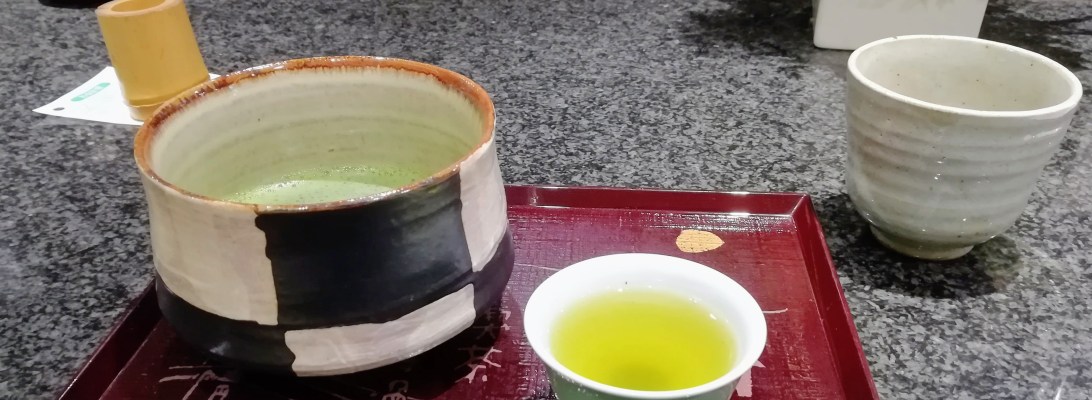
When my matcha was served, it came with yet another small cup. This time the small cup contained a hot bright green liquid. After enjoying the hojicha, I bravely took a sip of the unknown tea. As soon as I caught a whiff of the tea, I knew I wouldn’t like the flavour. It smelled and tasted exactly like vegetable broth. I was convinced it was vegetable soup, but later found out it was sencha. Apparently most people preferred the taste of sencha over matcha, and so it is served to clear the palate.
After tasting one of the best and worst teas I’ve ever had, it was time for the main event. I won’t leave you in suspense any longer, except to say that this trip has completely changed the way I drink matcha. The first sip was so exceptional that I had to pause in appreciation before taking another. The matcha tasted incredible, and was obviously very fresh and of high quality. However, the skilled preparation took it to the next level. The delicate foam, the fully dissolved powder, and the perfectly warm water were all signs of an expertly made matcha.
Paying attention to details not only pays off in terms of flavour, but it also makes you appreciate matcha more than you would if you had in a plastic to-go cup while rushing to a meeting. It reminds me of a quote by the monk Jeong Kwan, who said on Chef’s Table: “I make food as a meditation.” Both the quote and this tea experience have had a huge impact on the way I prepare matcha and food in general.
If you are curious, here’s how I prepare my matcha.
- Boil filtered water and let stand overnight. Japanese tea tastes best in soft water.
- Boil water again once you are ready to drink matcha.
- Pour the boiling water into your matcha bowl, and let stand for a minute or so.
- Transfer the water into another vessel. This helps warm the bowl, and then cools down the water to 80°C to avoid burning the matcha.
- Sift two scoops of matcha into the bowl to prevent clumps.
- Add a little bit of the warm water into the matcha bowl.
- Whisk quickly in a zig-zag shape for approximately 30 seconds. Once foam appears, slow down and get rid of any air bubbles.
- Add the rest of the water. If you’d like to prepare a latte instead, then add half of the remaining warm water along with non-dairy milk.
34.673132
135.501521




 Danielle Geva