I’ll have the yellow and blue

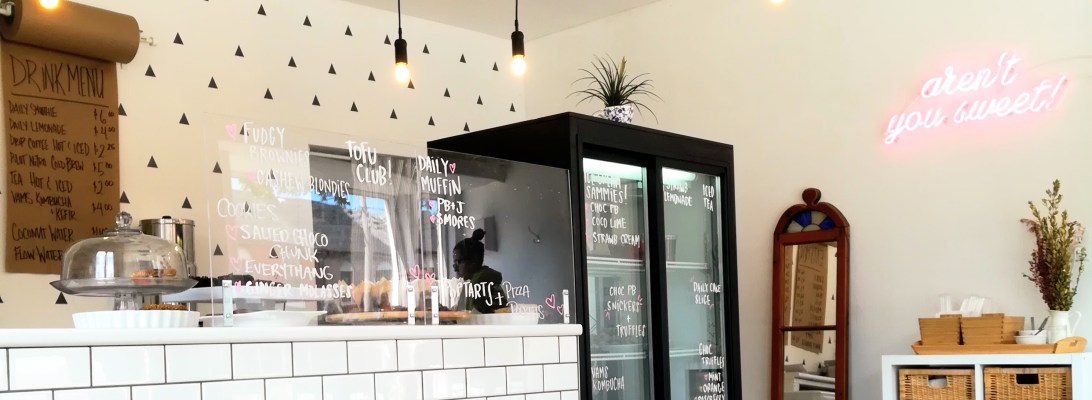
Sweet Hart Kitchen

No trip to Kensington Market is complete without a visit to Sweet Hart Kitchen. After originally tasting their delicious desserts at Veg Food Fest, I was delighted when I found out they had opened a physical shop.

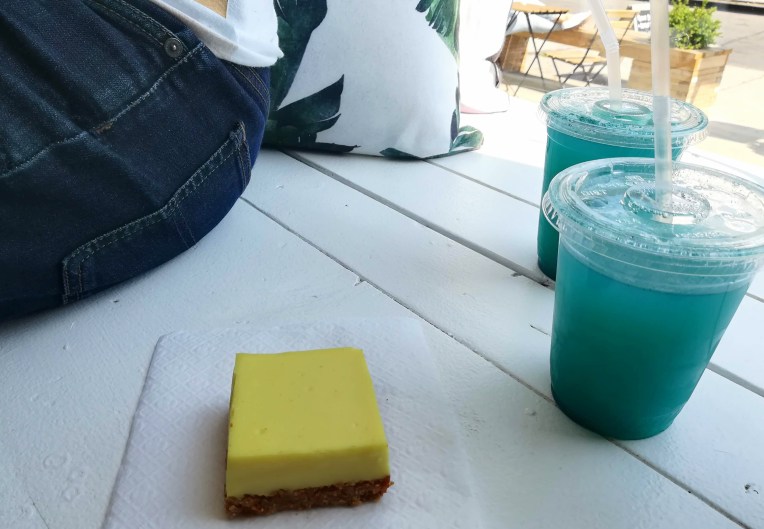
blue lemonade and yellow lemon bar

The last time I stopped by Sweet Hart Kitchen, I got their blue lemonade and yellow lemon bar. The bright colours made for a perfect summer treat, especially knowing they weren’t full of artificial colours and flavours. They both tasted even better than they looked.

Every time I enter the shop, I spot a new and temping item. Here’s a few of their creative vegan and gluten-free creations I’ve had in the past.

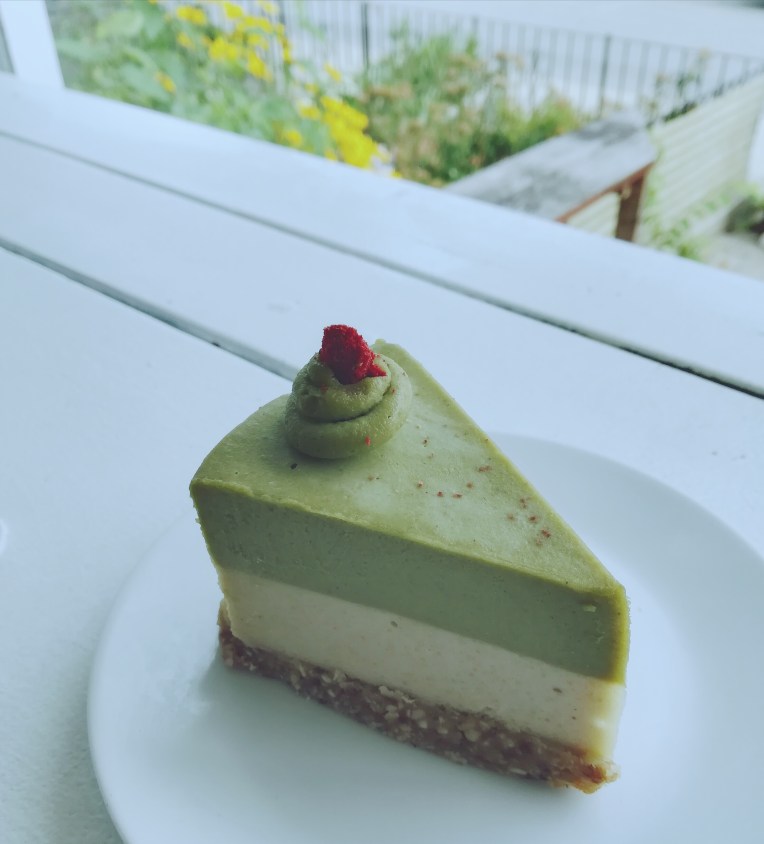
Matcha Vanilla Cream

This cake requires patience and precision. I know because I’ve tried to replicate it. After soaking cashews for hours on end, you’ve got to blend them until the texture is silky smooth. After avoiding cashew bits, you need to worry about matcha clumps. Too much matcha may also affect the delicate balance of flavours. Sweet Hart Kitchen’s Matcha Vanilla Cream cheesecake has the perfect combination of matcha, vanilla, and natural sweeteners.

Cookie Dough Cheesecake
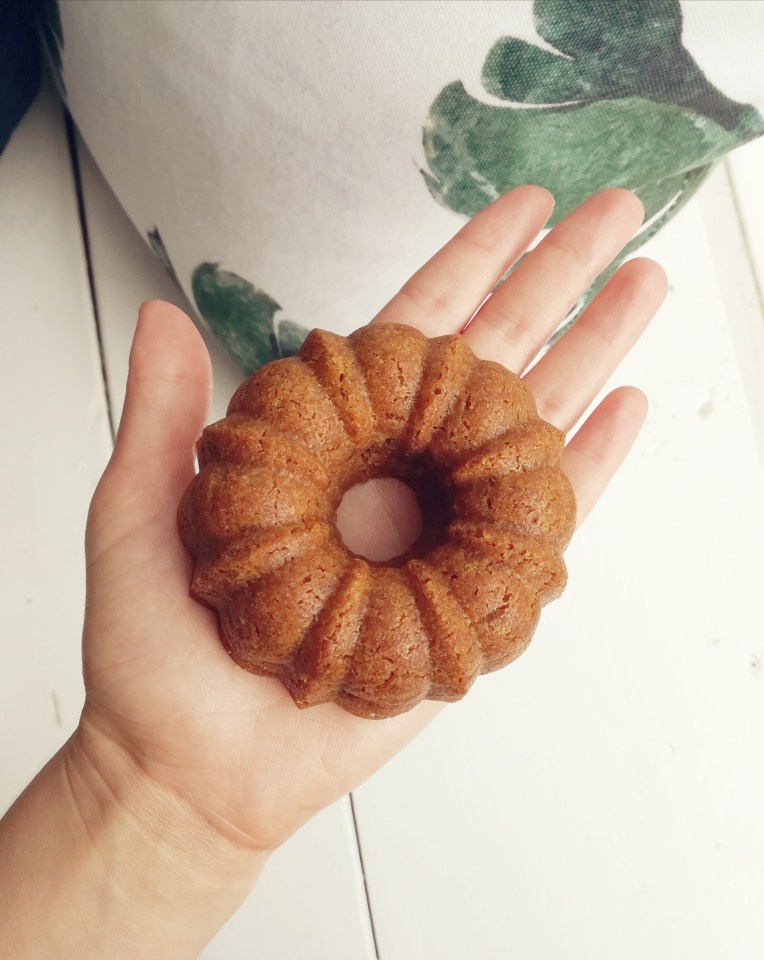
Vanilla Earl Grey Bundt Cake

This beautiful cake appears simple, but since it’s gluten-free I’m betting it took several attempts to perfect. As a London Fog fan, I loved this flavour.

Tiramisu Square
Tiramisu Square

If you’re running short on time, you can always grab Sweet Hart Kitchen to go. Warning: some treats won’t make it all the way home.

Hibiscus + Goji Berry Kombucha and Apple Berry Heart Pop-tart
Matcha Ice Cream Sandwich

Visiting Weir’s Lane Lavender & Apiary during a heat wave

Visiting Weir's Lane Lavender & Apiary during a heat wave

There are still plenty of adventures to share from Japan, but I wanted to write about what I’ve been up to in (and around) Toronto. I especially wanted to write about Weir’s Lane Lavender & Apiary before the lavender season ends.

After planning to visit a lavender farm for months, I finally made it to Weir’s Lane. It was the perfect time to see both the English and French lavender flowers. Although, I do wish it wasn’t during a heat wave.

I breathed in the relaxing scent, as I walked among the lavender rows. Since the sun was beaming down, and the field was fairly small, I felt that I had made the most of it after a few minutes.

When I headed back to the car, I saw some people walking down the path. I figured that’s where the shop was and decided to check it out. As the path curved, an even bigger lavender field revealed itself. I forgot all about the heat, and excitedly walked towards the fragrant blooms.

Neighbouring farms and trees hid the roads, cars, and buildings. It felt incredibly peaceful to be surrounded by nature. The only two other people in the field were quietly taking photos. Before leaving, I did the same. Apparently my silly poses gave the other people ideas for new angles, and they stayed behind continuing to snap photos.

Visiting Weir's Lane Lavender & Apiary during a heat wave

On my way to the shop, I noticed thousands of bees buzzing around stacked boxes. One of the owners casually asked if I was interested in bees. My gut reaction was to say nope and keep on walking, but he reassured me that the bees wouldn’t risk their short lives to hurt me. He then continued to explain all kinds of fascinating tidbits about bees. When he found out I was vegan, he shared the gentle way in which they treat the bees. They never move the hives, and only gather honey once a year before it overflows the hive. They gather the honey long before the winter, ensuring the bees have enough time to adequately stock up for the cold.

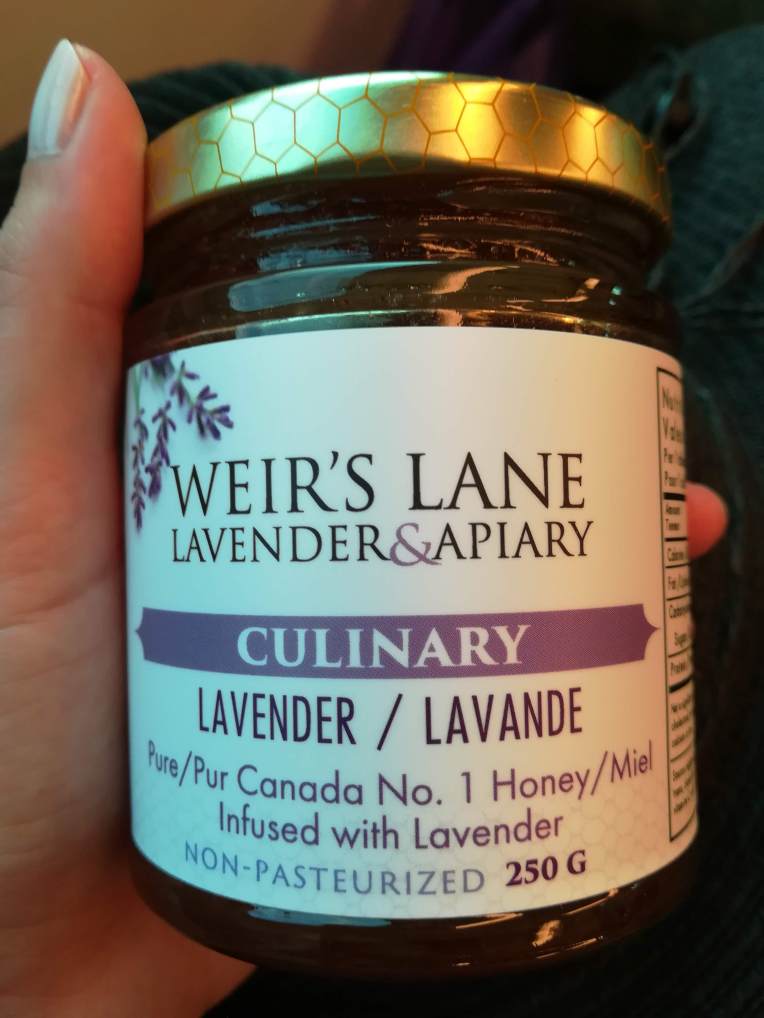
The ticket prices included a coupon for the shop, and after learning about their honey I wanted to give it a taste. I ended up buying two jars of lavender infused honey. There were also lavender plants for purchase, but the owner advised that they would only thrive directly in the ground.
Visiting Weir's Lane Lavender & Apiary during a heat wave

As soon as I got home, I ate a spoonful of the lavender infused honey. It tasted sweet and fresh with just the right amount of lavender flavour. The distinct taste was there, but it didn’t feel like eating a bar of soap as I feared. The liquid gold tastes great in tea, but my favourite way to enjoy it is as a crepe filling. I either spread it directly on the crepes, or prepare a paste with the honey and ground up black sesame seeds. Just typing this is making me crave it.

If you don’t get a chance to visit a lavender farm this season, you can always start planning one for next year.


Plant-Based Ramen at Chabuton in Yodobashi-Umeda

Plant-Based Ramen at Chabuton in Yodobashi-Umeda

One of the first restaurants on my list was Chabuton in Osaka. Mostly because both their website and reviews confirmed they had vegan options. Chabuton was also more likely to be open, as well as easily accessible, as it was located at Yodobashi-Umeda. The incredibly busy department store was on the subway line, making it the perfect lunch spot on the way to drinking tea in Kyoto.

Plant-Based Ramen at Chabuton in Yodobashi-Umeda

When the plant-based ramen arrived, it was reassuringly similar to all of the pictures I’ve seen online. Unfortunately, it turns out the reviews also accurately described its flavour. It was great as a vegetable soup, but far from a traditional tasting ramen. Now of course I’m no expert, especially since I’ve only ever had vegetarian ramen. However, ramen broth is usually much thicker and has a deep complex flavour. This dish tasted more like a light soup with fresh vegetables and noodles. While I’m grateful they had a vegan option at all, I’d love to taste V2.

Plant-Based Ramen at Chabuton in Yodobashi-Umeda

Since I was still hungry, I ordered the green veggie gyoza. I had to triple check the nutritional info, and rejoiced every time I saw the veggie gyoza were in fact vegan. The gyoza were pan fried and perfectly crisp. There was even a gyoza and rice set, which I planned on getting if I returned.

Two things to keep in mind when ordering a dish that comes with a dipping sauce in Japan. One, never assume the dipping sauce of any dish is free of fish-based dashi. Two, if all else fails there’s usually plain soy sauce nearby.

Soy Chai Latte at Yodoyabashi Odona in Osaka

Soy Chai Latte in Osaka 1

After a very early breakfast of convenience store goodies, I started to get peckish. Since it was only 10 am, I stopped at a Starbucks to refuel.

The Starbucks at Yodoyabashi Odona was quiet and classy. The glass display case was full of the usual items and some extra decadent treats. I skipped those as I figured my drink would have plenty of sugar already.

The friendly barista greeted me, and I placed an order for a medium soy chai latte. My go-to size is a small, but in Japan I get a medium. This isn’t because of the minuscule difference between Canada’s mL sizes and Japan’s cc sizes. It’s because a small is interpreted as a Tall in Canada, and a Short in Japan. Yes, I’m the annoying customer that forgets to use Starbucks’ official size names. I get flustered enough trying to remember my order and to ask for soy milk. While waiting in line, I always wonder if I should say soy latte or latte with soy milk. The first sounds better, but the second emphasized the soy more and might be more in line with the register process.

I was extra nervous about asking for soy milk in Osaka. When I previously asked other restaurants in Japan if they had soy milk, they would only catch the word milk and excitedly say yes. Even though I made a mental note to say ‘soy’ instead of ‘soy milk’, I accidentally blurted out chai latte with soy milk.

Soy Chai Latte in Osaka 1

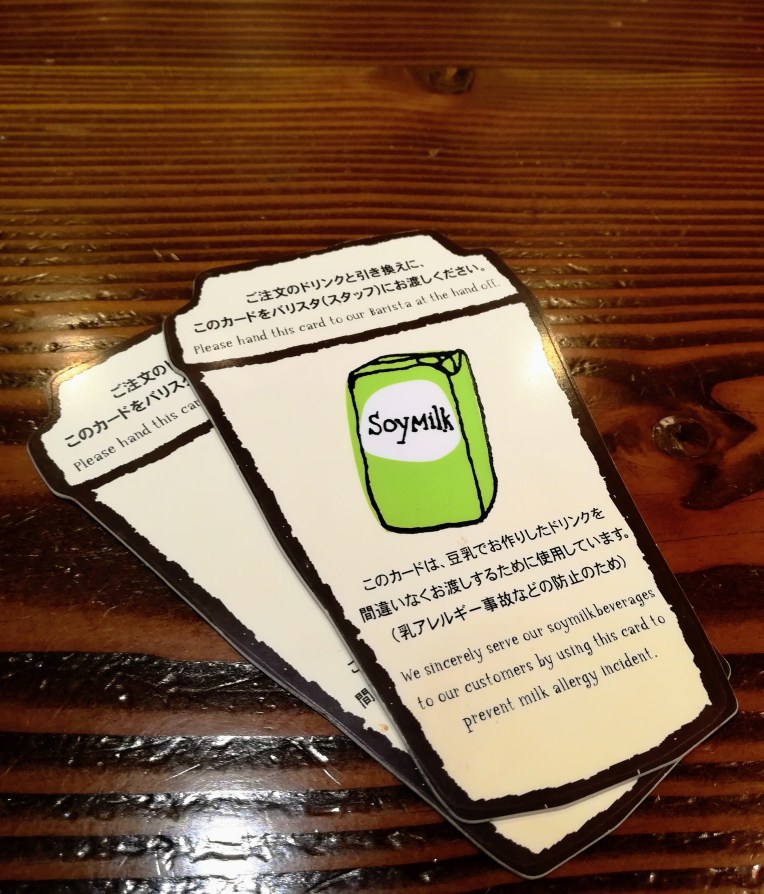
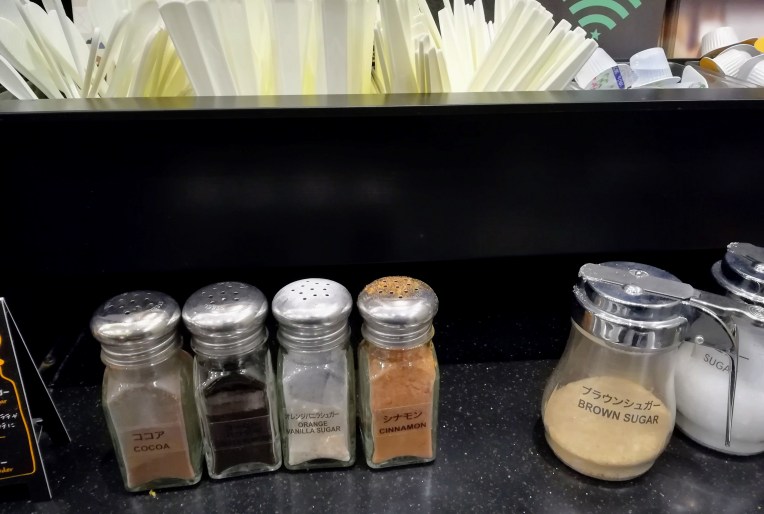
Turns out I was worried for nothing. The barista clearly understood my request, and even handed me a cute soy milk card to ensure I was given the right drink. I quickly snapped a picture of the card before my drink was ready. Then I snapped another of the condiments bar. There were multiple sugar options (which I skipped), including: white & brown sugar, liquid sugar, and even orange vanilla sugar. There was also something called coffee powder, which looked like finely ground coffee that may or may not have been sweetened.

Soy Chai Latte in Osaka 2

I enjoyed my soy chai latte on a gorgeous red velvet chair, and got to planning the rest of the day.

Soy Chai Latte in Osaka 4

First taste of matcha in Shinsaibashi

First taste of matcha in Shinsaibashi

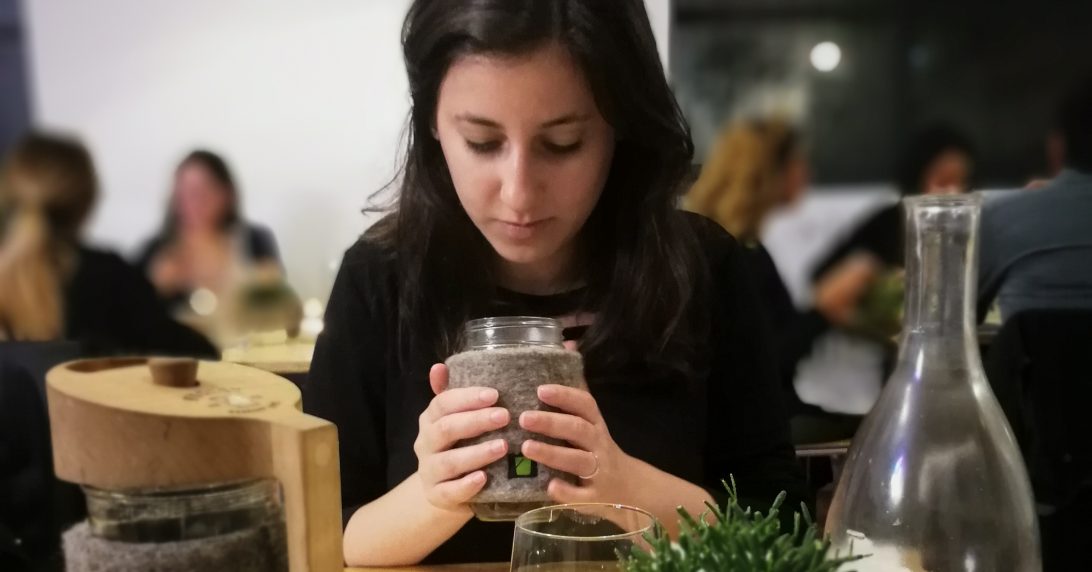
Prior to travelling to Japan, I had done some research into the best places to buy and sip on ceremonial grade matcha in Uji and Osaka.

The first place I visited was Uji-en (Uji Garden) in Shinsaibashi. The tea shop is located near the end of a covered street in the shopping district, which feels like a large yet crowded hallway. Since there were two tea shops on the same area, I checked out the merchandise to try and figure out if I was in the right place. Taking the time to look around, also helped me spot the tea drinking area. Even though I knew Noren were traditionally draped at the entrance of restaurants, I thought the fabric might be concealing a stock room. Luckily, I got a brief glimpse into the back of the tea shop as another customer exited. It felt impolite to walk in, and so I asked another shopkeeper if I could enter while miming drinking matcha by holding my two hands up and tilting an imaginary matcha bowl to my mouth. The shopkeeper understood I wanted to drink matcha, not just buy a tin of tea, and enthusiastically invited me in.

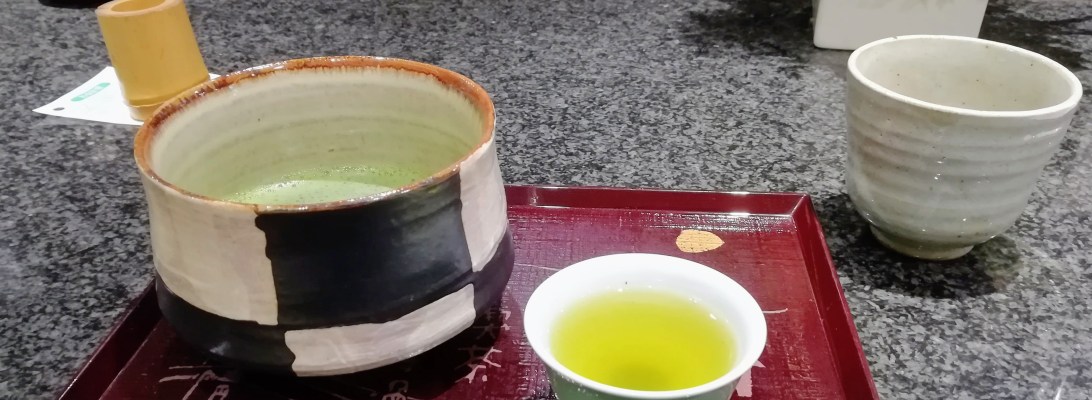
There were plenty of seats, but I decided to sit by the counter to get a better view of the matcha preparation. Before placing my order, I was given a small cup with a deep caramel liquid. The drink was cold, and had a rich earthy aroma and subtle sweetness. It didn’t have the strong bitter aftertaste of green or black tea. I didn’t know it at the time, but that was my first taste of roasted green tea also known as Hojicha.

When my matcha was served, it came with yet another small cup. This time the small cup contained a hot bright green liquid. After enjoying the hojicha, I bravely took a sip of the unknown tea. As soon as I caught a whiff of the tea, I knew I wouldn’t like the flavour. It smelled and tasted exactly like vegetable broth. I was convinced it was vegetable soup, but later found out it was sencha. Apparently most people preferred the taste of sencha over matcha, and so it is served to clear the palate.    

After tasting one of the best and worst teas I’ve ever had, it was time for the main event. I won’t leave you in suspense any longer, except to say that this trip has completely changed the way I drink matcha. The first sip was so exceptional that I had to pause in appreciation before taking another. The matcha tasted incredible, and was obviously very fresh and of high quality. However, the skilled preparation took it to the next level. The delicate foam, the fully dissolved powder, and the perfectly warm water were all signs of an expertly made matcha.

Paying attention to details not only pays off in terms of flavour, but it also makes you appreciate matcha more than you would if you had in a plastic to-go cup while rushing to a meeting. It reminds me of a quote by the monk Jeong Kwan, who said on Chef’s Table: “I make food as a meditation.” Both the quote and this tea experience have had a huge impact on the way I prepare matcha and food in general.

If you are curious, here’s how I prepare my matcha.

  1. Boil filtered water and let stand overnight. Japanese tea tastes best in soft water.
  2. Boil water again once you are ready to drink matcha.
  3. Pour the boiling water into your matcha bowl, and let stand for a minute or so.
  4. Transfer the water into another vessel. This helps warm the bowl, and then cools down the water to 80°C to avoid burning the matcha.
  5. Sift two scoops of matcha into the bowl to prevent clumps.
  6. Add a little bit of the warm water into the matcha bowl.
  7. Whisk quickly in a zig-zag shape for approximately 30 seconds. Once foam appears, slow down and get rid of any air bubbles.
  8. Add the rest of the water. If you’d like to prepare a latte instead, then add half of the remaining warm water along with non-dairy milk.